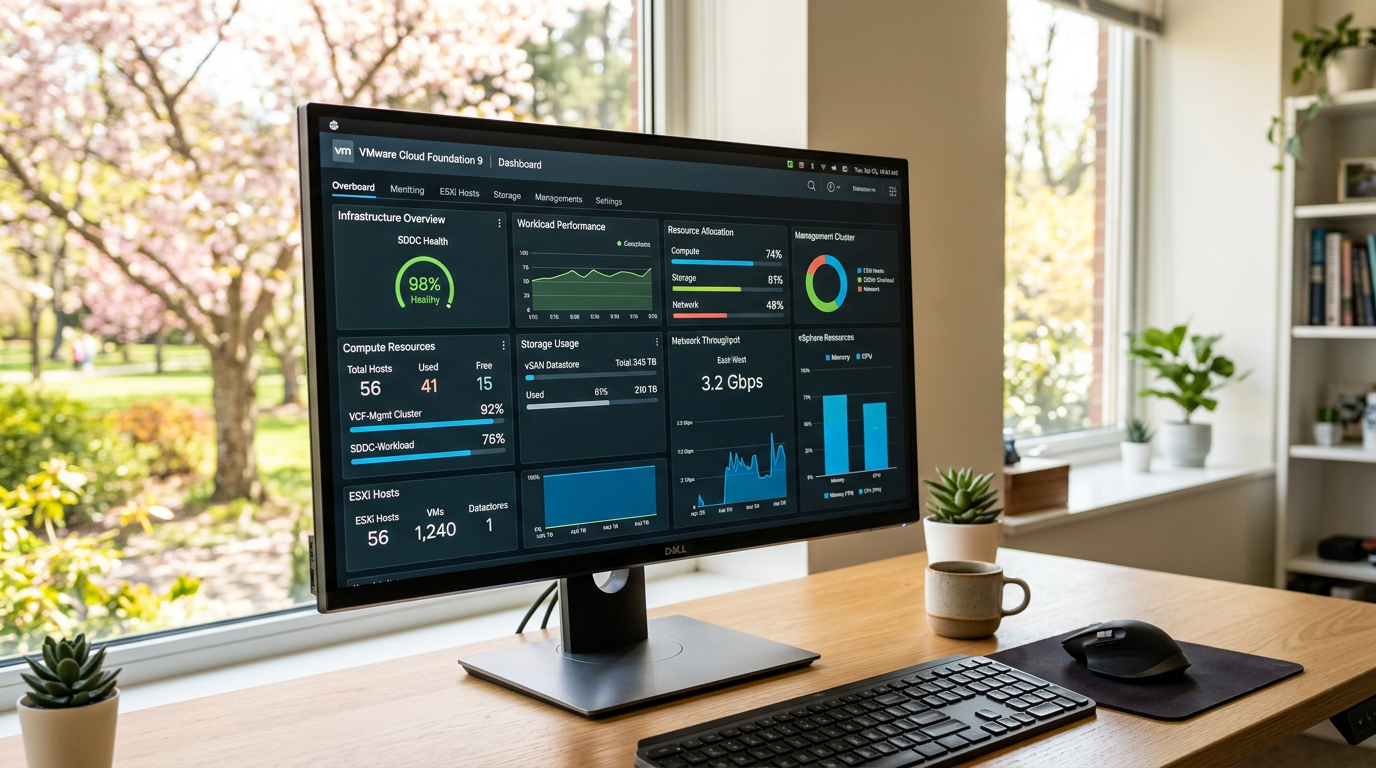
VCF 9, Unified Private Cloud
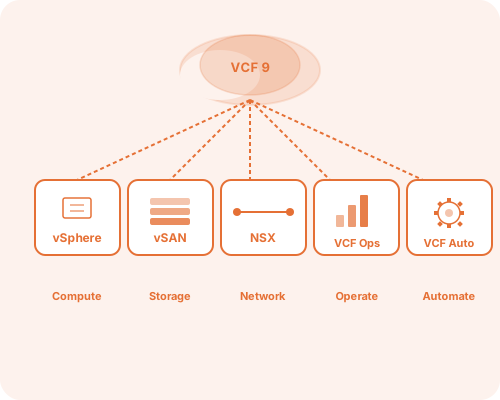
The five core components of VCF 9, plus Kubernetes and Private AI
vSphere 9
Compute layer with memory tiering, Confidential Computing and enhanced GPU virtualization.
vSAN 9
Hyperconverged storage with native vSAN-to-vSAN replication (1-min RPO) and 46% storage efficiency.
NSX 9
Native VPCs in vCenter, Enhanced Data Path (3x switching) and Zero Trust security.
VCF Operations
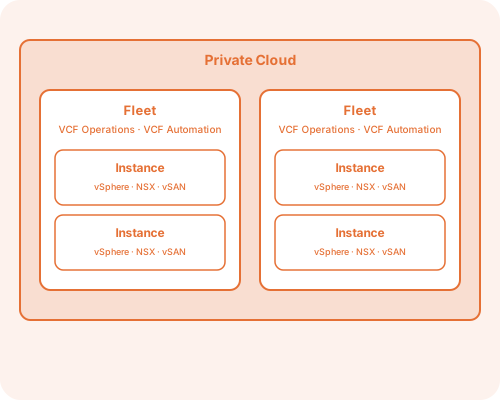
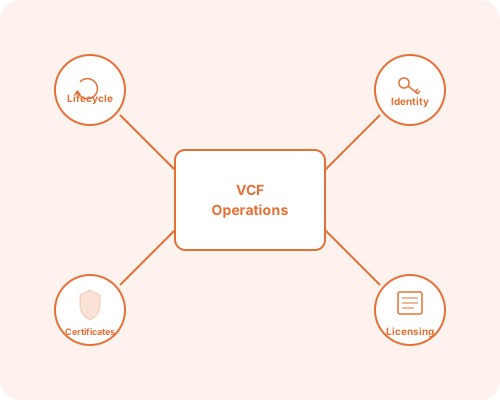
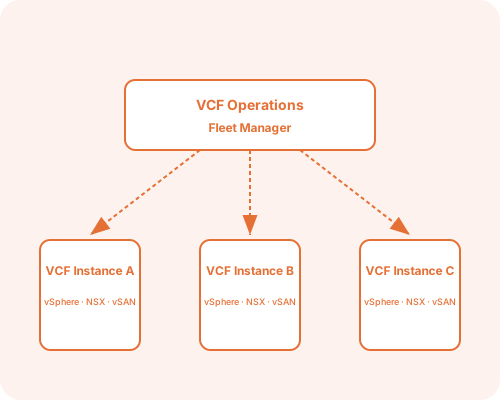
Fleet Manager for lifecycle, identity, certificates and observability, replaces SDDC Manager and Aria.
VCF Automation
Self-service IaaS with Service Broker, IaC and multi-tenancy, successor to Aria Automation.
vSphere Kubernetes Service
Enterprise Kubernetes via Supervisor, formerly Tanzu. Windows containers and VM/container side-by-side.
What is VMware Cloud Foundation 9?
Is VCF 9 right for you?
- Choose VCF 9: multi-site NSX with Zero Trust
- Choose VCF 9: Kubernetes with enterprise lifecycle (VKS)
- Choose VCF 9: Private AI with GPU pooling
- Prefer Proxmox: standard VM workloads without NSX requirements
VCF Operations & Automation
- Fleet Manager: one console for multiple VCF instances
- Unified licensing: one subscription file for the entire stack
- Auto-renewing certificates with multiple CAs
- Self-service provisioning via Service Broker
Our VCF 9 approach
- Honest assessment: is VCF 9 really the right choice?
- VCF 5.x -> 9 upgrade and Aria -> VCF Ops convergence
- Fleet deployment for multi-site scenarios
- Private AI Foundation with NVIDIA integration
Why VCF 9 (when it fits)?
Unified Lifecycle
One Fleet Manager for patches, upgrades and compliance across all VCF instances.
Zero Trust Networking
NSX with native VPCs, Distributed IDS/IPS and per-workload micro-segmentation.
Enterprise Kubernetes
VKS Supervisor turns vSphere into a Kubernetes control plane, VM + container on one platform.
Private AI
GPU pooling and NVIDIA integration for on-premises AI with data sovereignty.