Ga naar hoofdinhoud

vSphere Kubernetes Service (VKS)

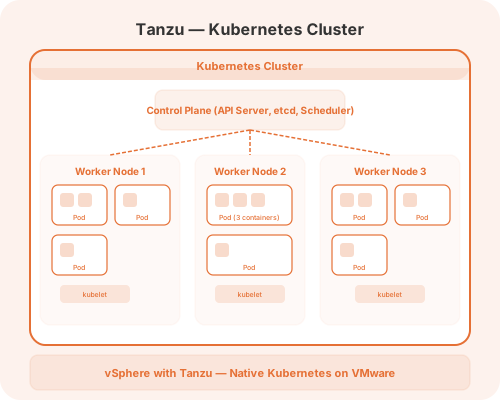
Enterprise Kubernetes on VCF, formerly Tanzu Kubernetes Grid. VKS turns vSphere into a Kubernetes control plane via Supervisor, with Windows containers and VM + container side-by-side.

vSphere Kubernetes Service (VKS)
VKS
Formerly Tanzu
Win+Lin
Containers
99.9%
Availability
Multi
Cluster support

Enterprise Kubernetes on VCF 9

Supervisor, namespaces and Windows containers on VCF 9

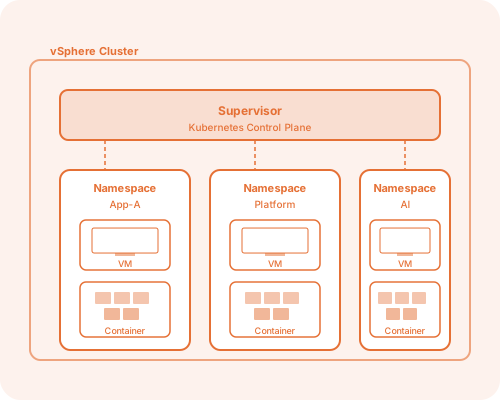
Supervisor Cluster

vSphere itself becomes the Kubernetes control plane, no separate K8s management stack.

Namespaces

Separation between platform team and devops/tenant workloads via vSphere namespaces.

Windows Containers (NEW in 9)

Run Windows and Linux containers side-by-side on the same VKS Supervisor.

VM + Container side-by-side

Traditional VMs and Kubernetes workloads on one platform, with consistent storage and networking.

Native NSX Networking

Native VPCs and micro-segmentation for Kubernetes namespaces via NSX 9.

Lifecycle via VCF Operations

Cluster deployment, upgrade and patching via Fleet Manager and VCF Operations.

Introduction

What is VKS?

vSphere Kubernetes Service (VKS) is the Kubernetes layer of VCF 9: the successor to Tanzu Kubernetes Grid. With VKS, vSphere itself becomes a Kubernetes control plane via the Supervisor. Clusters, namespaces and pods are managed natively in vCenter, without a separate management stack.
What is VKS?
Architecture

Supervisor & Namespaces

The Supervisor turns a vSphere cluster into a Kubernetes control plane. Namespaces give platform teams and tenants isolated environments with their own quotas, networks and RBAC. In every namespace, VMs, Kubernetes pods and Windows containers can run side-by-side.
  • Supervisor: vSphere as Kubernetes control plane
  • Namespaces per team, tenant or application
  • Windows containers alongside Linux pods (new in 9)
  • VM + container on one platform with consistent management
Supervisor & Namespaces
Platform

VCF Integration

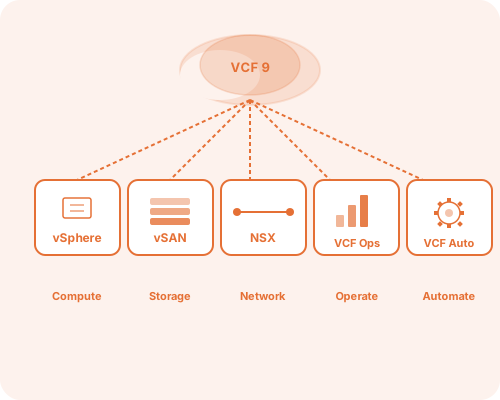
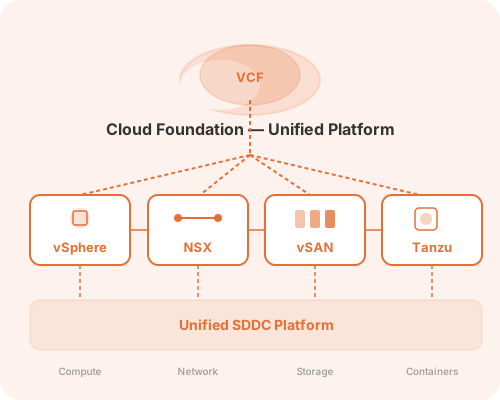
VKS is fully integrated with the rest of VCF 9. NSX 9 delivers native VPCs and micro-segmentation for namespaces. vSAN 9 provides persistent storage with policies. VCF Operations handles cluster lifecycle, and VCF Automation provides self-service namespace provisioning via Service Broker.
  • NSX 9 Native VPCs for Kubernetes networking
  • vSAN 9 persistent storage with VM policies
  • VCF Operations for lifecycle and observability
  • VCF Automation Service Broker for self-service namespaces
VCF Integration
Services

Our VKS Services

Our Kubernetes-certified engineers (CKA, CKAD) support the design, implementation and operation of VKS, from migrating Tanzu to VKS to end-to-end self-service Kubernetes platforms on VCF 9.
  • Migration from Tanzu Kubernetes Grid to VKS Supervisor
  • Namespace design and multi-tenant governance
  • Windows container enablement for legacy .NET workloads
  • CI/CD pipeline integration with VCF Automation
Our VKS Services

Why VKS?

Developer Productivity

Self-service Kubernetes namespaces via Service Broker, infrastructure available in minutes.

Enterprise Security

Micro-segmentation via NSX and namespace isolation with RBAC.

Unified Lifecycle

Cluster and namespace lifecycle via VCF Operations, no separate K8s management stack.

VM + Container Flexibility

Legacy VMs and modern containers on one platform, including Windows.

VKS Use Cases

Cloud-Native Development

Microservices and Kubernetes workloads on an enterprise-grade platform.

Legacy Modernization

Windows containers alongside existing VMs, modernize in phases without changing platform.

DevOps Enablement

Self-service namespaces for dev teams via VCF Automation.

AI/ML Workloads

GPU-enabled Kubernetes for AI via [Private AI Foundation](../private-ai-foundation/).

Ready for VKS on VCF 9?

We support migration from Tanzu to VKS or greenfield Kubernetes on VCF 9. Contact us for an assessment.

Request assessment Bekijk klantcases